Salma Desire: A Modern Handwritten Font That Elevates Small Business Branding
A Fresh Look for My Café’s Menu Design
As a creative consultant who works with small businesses on branding, I recently helped a local café redesign their menu. They wanted something that felt warm, approachable, and a little bit fancy—without looking outdated or overly casual. That’s when I discovered Salma Desire, a modern handwritten font that struck the perfect balance between elegance and personality.
The café’s original menu used a basic sans serif font that, while readable, lacked any sense of character. We wanted something that would reflect the cozy, artisanal vibe of the place. Salma Desire brought a softness and authenticity that transformed the menu from generic to memorable.
What Makes Salma Desire Stand Out?
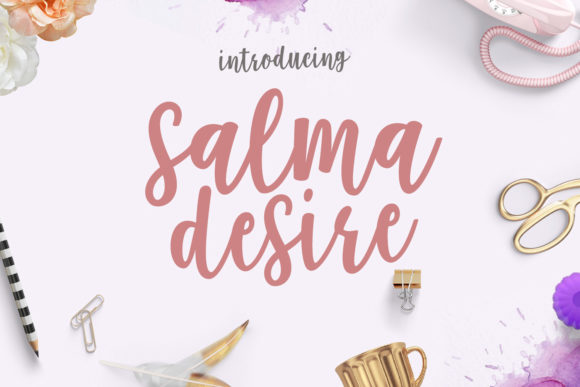
Salma Desire is a Script Amp font, meaning it has a dynamic, flowing style that mimics natural handwriting but with a polished, intentional design. It’s not overly ornate like some traditional script fonts, nor is it too casual like a quick handwritten note. Instead, it feels like a confident signature—perfect for businesses that want to communicate warmth, creativity, and professionalism.
The font has a modern slant with smooth curves and gentle flourishes that add visual interest without distracting from the message. It’s ideal for short-form text like headlines, brand names, and taglines. Whether used in a logo, a product label, or a social media graphic, Salma Desire gives any design a refined, human touch.
Real-World Branding Uses for Small Businesses
I’ve used Salma Desire across a variety of small business materials, and it consistently delivers a polished look. Here are a few examples from real projects:
- A local bakery used it for their packaging tags, giving their handmade cookies a boutique feel.
- A skincare brand applied it to product labels, helping them stand out on shelves with a soft, luxurious aesthetic.
- A candle maker chose it for jar labels, pairing it with a clean sans serif for a balanced, modern look.
- An online shop owner used it in Instagram story templates to highlight seasonal promotions in a way that felt personal and elevated.
Each of these businesses saw an immediate improvement in how their branding was perceived—more cohesive, more intentional, and more trustworthy.
When to Use Salma Desire (And When to Pair It With Other Fonts)
Salma Desire shines brightest in display text applications—like logos, headlines, and short phrases. It’s not recommended for long paragraphs or body copy, where clarity and legibility are key. Instead, think of it as your go-to font for moments where you want to make a visual impact.
For example, I often pair it with a simple sans serif like Helvetica or a clean serif like Georgia to create contrast and balance. This combination works beautifully on business cards, thank-you notes, and packaging inserts. The elegant script draws the eye, while the supporting font ensures the message remains clear and easy to read.
Readability Tips for Real-World Applications
One thing I always remind small business owners about is the importance of readability, especially when using decorative fonts like Salma Desire. Here are a few practical tips:
- Use it at a larger size for printed packaging and signage to ensure the details are visible.
- Avoid using it in all caps or in very small sizes on digital thumbnails or mobile screens.
- Test it on mockups before printing or publishing to make sure it looks good in context.
- Pay attention to spacing—tight lettering can make some characters blend together, especially in lowercase.
These small adjustments can make a big difference in how your audience perceives your brand—especially when they’re scanning quickly on their phones or browsing a shelf of products.
What You Should Know Before Downloading
If you’re considering using Salma Desire in your business, make sure to check what’s included in the font package. Most premium fonts like this one come with multiple styles, ligatures, and alternate characters that add flexibility to your design. Also, confirm that the font includes a commercial license so you can use it on physical products, merchandise, and client work without legal concerns.
It’s also helpful to verify that the font supports a wide range of languages and special characters, especially if your business operates internationally or uses accented names in your branding.